Table of Contents
- Introduction
- Ingredients for Moroccan Spiced Chicken Tagine
- Preparation and Cooking Techniques
- The Role of Spices in Tagine Flavor
- Pairing Chicken Tagine with Side Dishes
- Nutritional Benefits of Moroccan Spiced Chicken Tagine
- Choosing the Right Tagine Pot
- Cultural Significance of Tagine in Moroccan Cuisine
- Variations and Adaptations of Chicken Tagine
- Conclusion
- Frequently Asked Questions
Introduction
Ingredients:
- 1 whole chicken, cut into pieces
- 2 tablespoons olive oil
- 2 onions, finely chopped
- 4 cloves garlic, minced
- 1 teaspoon ground ginger
- 1 teaspoon ground cumin
- 1 teaspoon ground coriander
- 1/2 teaspoon ground cinnamon
- 1/2 teaspoon turmeric
- A pinch of saffron threads
- Salt and pepper to taste
- 1 cup chicken broth
- 1 cup green olives, pitted
- 1 preserved lemon, quartered
- 1/2 cup fresh cilantro, chopped
- 1/2 cup fresh parsley, chopped
Embark on an enticing culinary voyage as we delve into the heart of Moroccan cuisine, where every spice tells a story and every dish is a celebration of culinary art. Moroccan Spiced Chicken Tagine stands as a testament to the region’s rich tapestry of flavors, capturing the spirit of a culture renowned for its aromatic, vibrant cuisine. Imagine a colorful marketplace, bustling with the scent of exotic spices alongside the backdrop of desert sands. This journey invites you to explore not just a dish, but the essence of a land where tradition and flavor are inextricably linked.
Ingredients for Moroccan Spiced Chicken Tagine
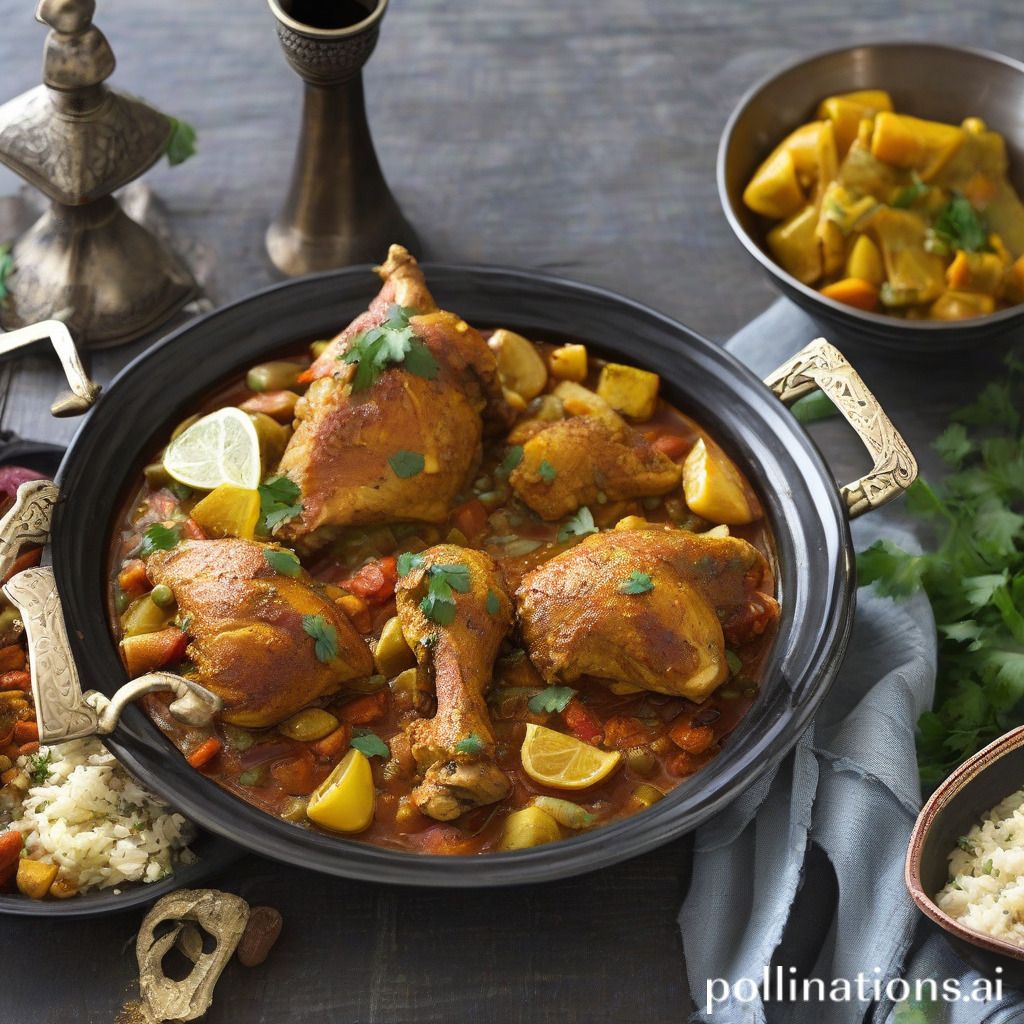
Moroccan Spiced Chicken Tagine is a delightful dish that captivates the senses with its aromatic spices and rich flavors. The core ingredients include chicken, typically thighs or drumsticks, which provide a tender and flavorful base. Essential spices include cumin, coriander, ginger, and cinnamon, which create a distinctive spice blend that defines the dish’s unique taste. Saffron, known for its vibrant color and luxurious aroma, is often added to enhance the flavor profile.
Onions and garlic are crucial for building the dish’s foundational flavors, while tomatoes add a necessary tang. Vegetables such as carrots or sweet potatoes can be included for an added layer of texture and sweetness. Dried fruits, usually apricots or raisins, introduce a subtle sweetness that balances the savory elements. Olives and preserved lemons contribute a briny, tangy element that is characteristic of Moroccan cuisine.
Chickpeas are often used to add heartiness and additional protein, making the dish both satisfying and nutritious. Fresh herbs like cilantro or parsley provide a fresh contrast to the deep, complex spices. Together, these ingredients create a symphony of flavors that make Moroccan Spiced Chicken Tagine a true culinary masterpiece.
Preparation and Cooking Techniques
Preparing Moroccan Spiced Chicken Tagine involves a blend of aromatic spices and traditional cooking methods that capture the essence of Moroccan cuisine. To start, marinate the chicken with a mixture of spices such as cumin, coriander, turmeric, ginger, and cinnamon, allowing the flavors to infuse the meat. This step is crucial for achieving the dish’s signature depth of flavor.
Next, begin by browning the chicken in a tagine, a traditional earthenware pot, or a heavy-bottomed pan, to lock in the juices and create a rich caramelized surface. Remove the chicken and sauté onions, garlic, and ginger until they become fragrant and golden. Incorporate any remaining spices and add vegetables like carrots, potatoes, or sweet potatoes.
Return the chicken to the pot and layer it with preserved lemons and olives for a burst of tanginess. Pour in enough chicken broth or water to cover the ingredients, then cover the tagine with its conical lid to trap steam and allow the contents to cook slowly.
Simmer over low heat for about 45 minutes to an hour, ensuring the chicken is tender and the flavors are well combined. Serve the tagine with couscous or warm, crusty bread to soak up the delicious sauce.
The Role of Spices in Tagine Flavor
The role of spices in a Moroccan Spiced Chicken Tagine is essential to crafting its intricate flavors. Moroccan cuisine, renowned for its vibrant and aromatic characteristics, leans heavily on a variety of spices to create depth and complexity. One of the most critical elements is the use of spices like cumin, coriander, and cinnamon, which offer a warm, earthy backbone to the dish. These spices are often foundational in a blend known as ‘ras el hanout,’ a spice mix that translates to ‘the head of the shop,’ implying the finest spices a shopkeeper has to offer.
Another star player is saffron, lending its distinctive and cherished aroma, a testament to the luxury associated with Moroccan dishes. Additionally, ginger adds a subtle heat, while paprika and turmeric contribute a peppery and mildly bitter element, enhancing the tagine’s golden hue. Such a harmonious blend of spices not only tantalizes taste buds but also represents the cultural melding of the region’s history and trade. Each spice serves a deliberate purpose, balancing sweet and savory notes while creating a fragrant experience that is both memorable and authentic. Without these spices, the traditional and soulful essence of Moroccan Spiced Chicken Tagine would be incomplete.
Pairing Chicken Tagine with Side Dishes
When enjoying a savory Moroccan Spiced Chicken Tagine, selecting the right side dishes can elevate the entire dining experience. Traditionally, this aromatic dish is served with a variety of accompaniments that complement its rich flavors. A classic choice is couscous, which soaks up the flavorful sauce and provides a wonderful texture contrast. This fluffy, steamed grain is often garnished with herbs like cilantro or parsley for an added burst of freshness.
Another excellent pairing is flatbread such as Moroccan khobz, which allows you to scoop up the tagine and savor every bit. For a healthier option, consider a side of roasted vegetables. Seasonal veggies like carrots, zucchini, and bell peppers can be roasted with olive oil, cumin, and coriander to mirror the spices in the tagine.
For those who enjoy a touch of sweetness, a Moroccan salad with oranges, fennel, and olives adds a refreshing counterbalance to the earthy spices of the chicken. Finally, a dollop of yogurt sauce infused with mint or lemon could provide a cooling effect and creamy texture.
These sides not only highlight the vibrant flavors of the chicken tagine but also offer delightful contrasts that make every meal a special occasion.
Nutritional Benefits of Moroccan Spiced Chicken Tagine
Moroccan Spiced Chicken Tagine is not only a flavorful and aromatic dish but also a nutritious choice for those looking to maintain a balanced diet. This delightful dish typically features a variety of healthy ingredients, each contributing to its overall nutritional profile.
The primary ingredient, chicken, is an excellent source of lean protein, essential for muscle growth and repair. Chicken also provides vital nutrients such as niacin and selenium, which play roles in metabolism and immune function respectively. Additionally, the rich blend of spices like turmeric, cumin, and ginger not only enhances flavor but offers antioxidant and anti-inflammatory benefits that are essential for overall health.
Vegetables like carrots, tomatoes, and onions often accompany the chicken, contributing dietary fiber, vitamins, and minerals. Fiber aids in digestion, while vitamins such as vitamin A and C support vision and skin health, and boost immunity. The inclusion of olives and preserved lemons adds a unique tang while supplying healthy fats and vitamin C.
Overall, Moroccan Spiced Chicken Tagine is a wholesome meal that combines proteins, healthy fats, and an array of vitamins, ensuring both a delicious and nutritionally beneficial dining experience.
Choosing the Right Tagine Pot
Choosing the right tagine pot is crucial for preparing the perfect Moroccan Spiced Chicken Tagine. A tagine is a traditional North African cooking vessel with a conical lid that promotes the circulation of steam, allowing for moist and tender results. When selecting a tagine pot, consider the material as it can significantly impact the cooking process. Ceramic tagines are excellent for slow cooking and retain heat well, making them a popular choice for traditional recipes. They are perfect for serving directly from the stove to the table, adding an authentic touch to your dish.
If you prefer a more durable option, consider a cast iron tagine. These are more versatile and can be used over varied heat sources, including induction cooktops. They also offer excellent heat distribution, ensuring even cooking. Non-stick tagines are available as well, providing easy cleanup and low-maintenance usage.
Size is another essential factor. Consider the number of servings you typically prepare. A medium-sized tagine is often sufficient for regular family meals, while larger ones are ideal for hosting gatherings. Aesthetics are worth noting too, as many tagines are beautifully designed, adding a decorative element to your kitchen. Choose a tagine that aligns with your cooking style and personal preferences to enhance your culinary experience.
Cultural Significance of Tagine in Moroccan Cuisine
The tagine, a traditional Moroccan dish, holds significant cultural importance in Moroccan cuisine. It is named after the earthenware pot in which it is cooked, characterized by its conical lid designed to trap steam and return the condensation to the dish, creating a flavorful and moist meal. The tagine symbolizes the communal and hospitable nature of Moroccan culture, often served as the centerpiece in gatherings and celebrations. Each region in Morocco has its unique variation, showcasing the diversity within the country’s cuisine.
Tagines are known for their aromatic spices, including cumin, coriander, and saffron, which are infused into the meat and vegetables, highlighting the rich and vibrant flavors of Morocco. Cooking a tagine is as much about the process as it is about the meal itself, representing the slow-paced, social aspect of Moroccan life, where meals are meant to be savored and enjoyed with family and friends.
The use of local ingredients such as olives, preserved lemons, and almonds further integrates the dish into the cultural and agricultural landscapes of Morocco. Therefore, the tagine is not just a culinary tradition but a reflection of the Moroccan way of life, embodying the history, values, and communal spirit of its people.
Variations and Adaptations of Chicken Tagine
Moroccan Chicken Tagine is a versatile dish that offers plenty of room for variations and adaptations, making it a favorite for many home cooks around the world. Traditionally, a tagine consists of chicken, a blend of spices such as cumin, turmeric, and cinnamon, and a medley of vegetables, all slow-cooked in the iconic, conical-shaped dish that shares its name. However, modern adaptations have seen the introduction of different ingredients and cooking methods.
For instance, some variations include the addition of dried fruits like apricots or raisins, which adds a touch of sweetness that balances the savory spices. Another popular adaptation is the inclusion of olives and preserved lemons, providing a delightful tangy twist. For those who prefer a heartier meal, chickpeas can be added for extra protein and texture. Additionally, some cooks experiment with different meats or even opt for a vegetarian version, substituting chicken with hearty vegetables like sweet potatoes or squash.
Cooking methods can also be varied; while traditional tagines are cooked slowly over a fire, the dish can also be prepared in an oven or using a slow cooker, making it accessible to today’s busy lifestyles without sacrificing the rich, layered flavors characteristic of this Moroccan staple.
Conclusion
Embarking on a culinary journey through the aromatic landscapes of Moroccan Spiced Chicken Tagine unveils the rich tapestry of flavors that define this exquisite dish. The harmonious interplay of spices like cumin, coriander, and ginger, paired with the subtle sweetness of dried fruits and the tangy burst of preserved lemons, creates a symphony of tastes that is both captivating and satisfying. Each ingredient, from tender chicken to hearty chickpeas, plays an integral role in crafting a meal that is as nutritious as it is delicious, reflecting the vibrant Moroccan culture and culinary traditions.
If this exploration has ignited your passion for vibrant, flavorful chicken dishes, then enhancing your cooking repertoire with more mouth-watering recipes would be the perfect next step. Dive deeper into the world of chicken cuisines with ‘The Chicken Bible: Say Goodbye to Boring Chicken with 500 Recipes for Easy Dinners, Braises, Wings, Stir-Fries, and So Much More.’ This comprehensive guide is perfect for those looking to add variety and excitement to their meals. Don’t miss out on this opportunity to revolutionize your cooking. Purchase your copy today and elevate your culinary creations to new heights!